Liubov Tsebekova

Product designer · Lisbon

Everything here is live. You can go and check it.

Five years inside a regulated financial marketplace and a six-brand e-commerce group, plus three products I researched, designed, built and put online myself. I do the research and the interaction design, and I write the frontend that ships — which means I find out early when a decision doesn’t survive being built.

How I work

three claims, with the evidence attached

I don’t hand the work over.

At Finuslugi I design in Figma and ship the production HTML and CSS to the email service provider myself. The three side products are mine down to the deploy.

It isn’t a purity thing. The last ten percent of a design only exists once it’s built, and I’d rather be the person who finds out that it doesn’t work.

I measure instead of assuming.

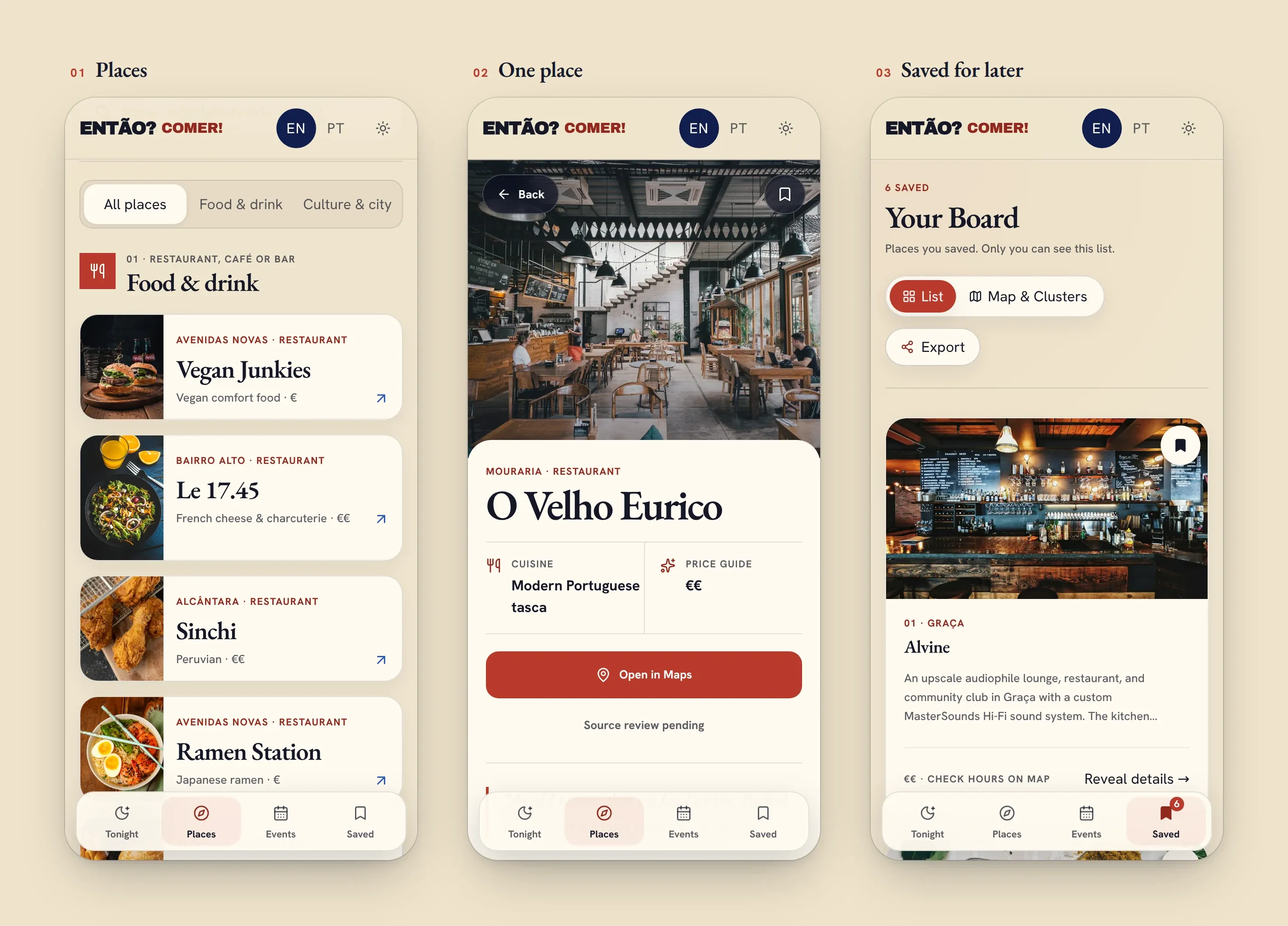
The quiz submit button on Então? Comer! looked fine in the mockups. Measured on a 375-pixel phone it was sitting 174px below the fold — the most important control in the product, invisible. It became a sticky action panel.

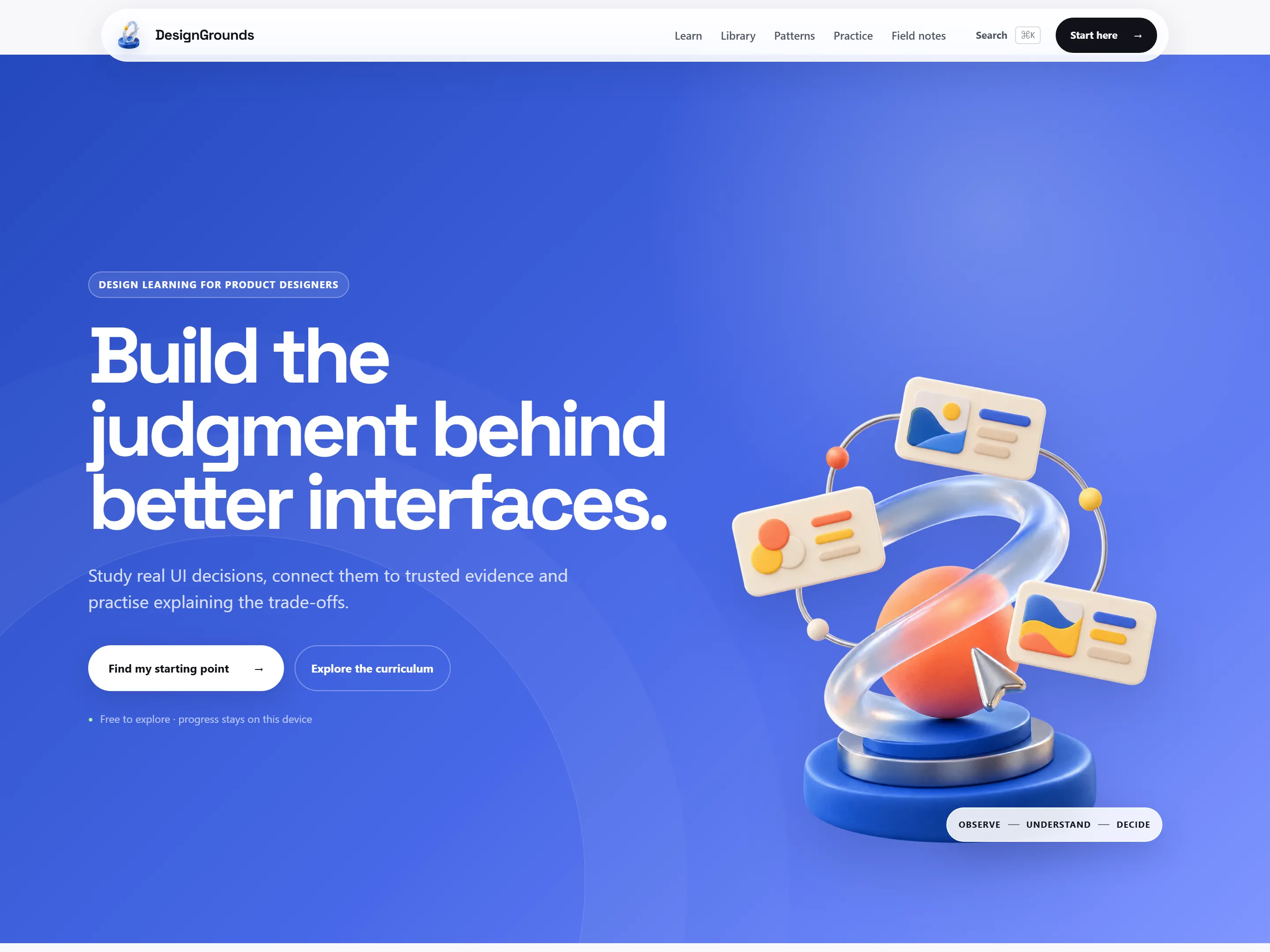
Running the quiz combinations against the database rather than looking at them found 44 of 288 paths returning nothing at all. The same habit turned up a stored XSS vector in DesignGrounds’ progress-import during a self-audit. Neither was visible in any screenshot.

I say how strong the evidence is.

Então? Comer! has no usability study, no satisfaction score and no conversion data, because it has no analytics yet. Saying so costs me a percentage in a stack of twenty portfolios.

What it does have is counted: 288 quiz paths run against the database, 160 copy fields diffed against their sources by a script that caught three invented details, contrast measured per pair. Every case here names its method and lets the method set the size of the claim.

What I’m looking for

Somewhere in Europe, remote or hybrid. The title matters less to me than the range: a product design role on a team that expects research and systems thinking, or a design-engineering role where writing the frontend is part of the job rather than an oddity.

If your product is genuinely constrained — regulated, data-dense, stuck on a legacy platform, or built by a team too small to hand things off — that’s the work I’m best at and the work I enjoy most.